Bridges and Baskets: The Talus bone
- Dec 4, 2025
- 4 min read
A SERIES EXPLORING THE ANATOMY OF CONNECTION + SUPPORT

Welcome to Bridges and Baskets, a series exploring the anatomy of connection and support. My hope is to illuminate the cooperative nature of our bodies - tracing the organic shapes and patterns of the human form through a morphological lens, and nurturing a more narrative understanding of ourselves as living expressions of Nature herself.
We begin this series with the Talus bone. It is one of the most elegant expressions of a “bridge” in the human body and, unexpectedly, also a basket - held, supported, suspended, and essential. This small but remarkable ankle bone embodies both metaphors so clearly that it feels like an invitation to begin our journey here. Let’s go!
Like many anatomical names, talus carries a story… Its lineage traces back to taxillus, Latin for “small die” or cube as these objects were once carved from animal knucklebones; and talutium, referring to “a slope or outcrop of rock debris.” Both origins evoke imagery of form influenced by gravity and circumstance; mirroring the talus’ own sculpted landscape and the role she plays in negotiating weight and force.

Image of medial (inside) view of the left foot with the talus bone highlighted in red.
Strategically positioned between the leg and the foot, the talus is an anatomical keystone - the central piece of a whole; a “key” connecting structure. In architecture, a keystone is the wedge-shaped stone at the apex of an arch that holds all other stones in place. Remove it, and the structure collapses.

In this illustration, we can see how the superior (top) aspect of the talus (highlighted again in red) supports the tibia and fibula of the lower leg, while its inferior (bottom) surface articulates with the calcaneus and its anterior surface connects with the navicular bone.
The purpose of this exquisite, saddle-shaped bone is to transmit load bi-directionally: downward / upward from gravity and body weight while standing or walking via ground-reaction forces; and posterior / anterior between heel, metatarsals and eventually, toes.
This makes the talus a key player in weight distribution and in coordinating complex movement between our heel and forefoot.
As an integral part of the ankle mortise joint (mortise describes a type of structural joint - wood, stone or bone! Etymology: mortise, "a hole or groove in which something is fitted to form a joint," comes from c. 1400 from Old French mortaise) the talus cradles our body’s weight, providing a stable base for the distal (far) end of the tibia. By maintaining alignment and distributing forces, she also helps to stabilize the arches of the foot.
And here is the truly magical aspect of this friend: she does all of this without a single muscular attachment. Our talus functions as a passive bridge - relying entirely on ligaments, bone shape, and the interplay of tension and compression in surrounding tissues to stay in place, support, and transmit load.
It is only through the talus’ relationships that she is able to fulfill her role in our ability to weightbear and move through the world -
a reminder that balance and strength often emerge from the support we allow ourselves to receive.

Beavers: keystone cuties!
Ecologically, we designate certain species as keystone because of their disproportionate impact on the health and stability of their ecosystems. Honey bees, otters, beavers, and wolves are all examples: remove them, and the community they support unravels.
In this sense, the talus behaves like a keystone of our internal ecosystem, subtly influencing the structures around her, enabling coordinated, fluid movement. She doesn’t act alone; she creates conditions that allow neighbouring structures to function, adapt, and thrive. Just as a river system depends on the engineerings of a beaver or a meadow depends on the hum of pollinators, the foot’s architecture depends on the talus to distribute forces, maintain alignment, and support dynamic change.
Across these examples - architectural, anatomical, and ecological - we see the importance of interdependence. Stability arises through relationship. Through co-operation, the whole becomes something more than the sum of its parts.
I wonder what it would feel like to yield into support - to hold and be held the way the talus does.
Stand and sense the meeting place between your feet and the ground, between your skin and the bones and tissues below. Direct your breath into these spaces. Allow your breath to illuminate the space between.
Gently shift your weight: heel to toes, outer edge to inner edge. As you rock, imagine a small bone resting in the centre of your ankle; neither fixed nor tense, but suspended in a web of support. Continue rocking and feel how your whole body responds when you allow that same quality of cradling within yourself as a whole.
As you return to stillness, sense the subtle balance created through these relationships... bone to bone, foot to ground, you to the world around you. Like the talus, we thrive not by standing alone, but by resting into the networks that hold us.
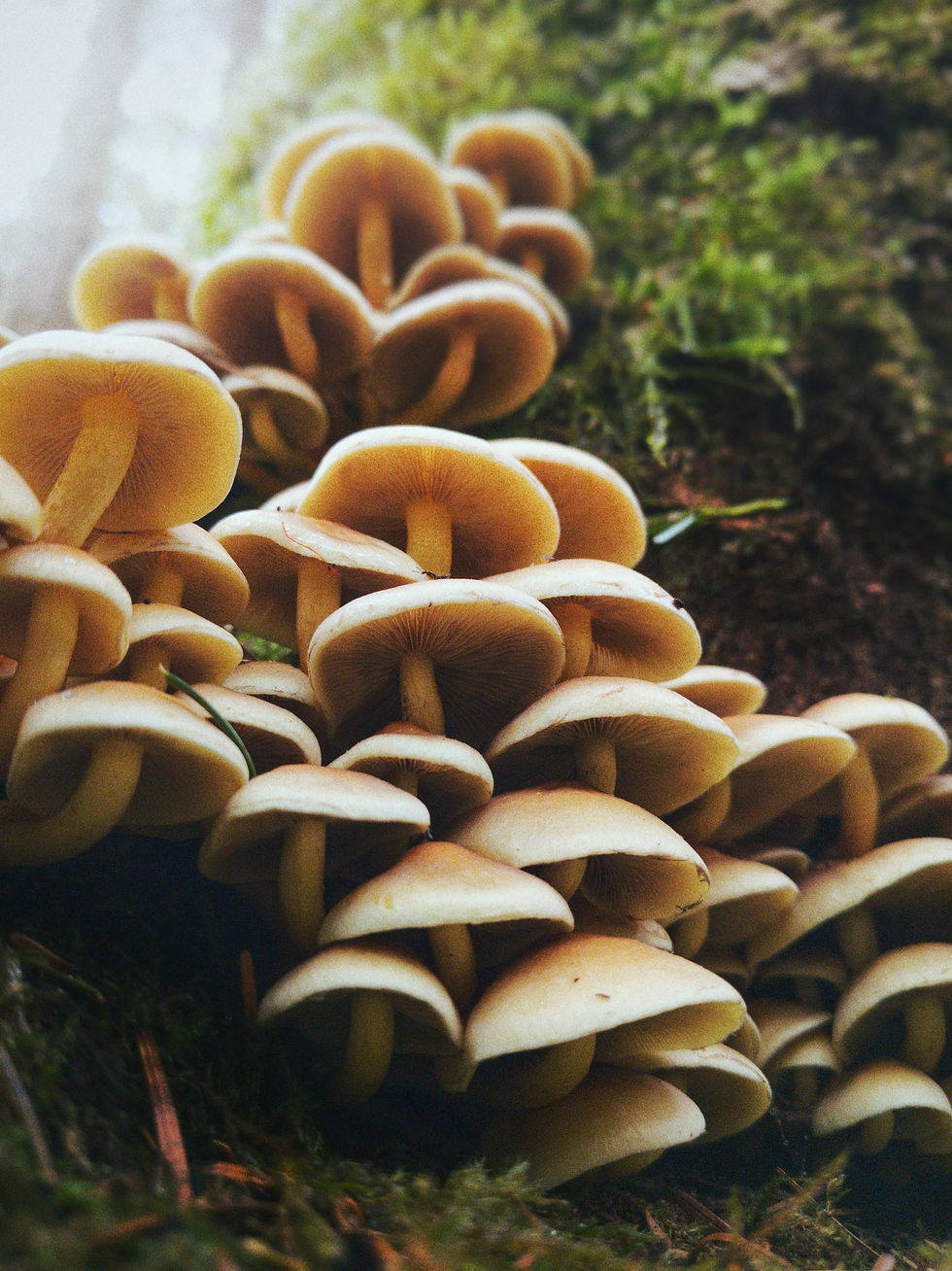
Through examining environments both innate and external,
we see that balance emerges through contact, trust, and the subtle exchanges that make an ecosystem whole.
Next time: working our way upwards from the feet we encounter our next bridge / basket pairing - the pubic symphysis and the pelvic floor. This post will explore the interplay of this dynamic duo; structural and energetic support at the base of our body.
“All flourishing is mutual.” -- Robin Wall Kimmerer


Always inspiring writing 💜 Thank you for this fantastic metaphor:
“….balance emerges through contact, trust, and the subtle exchanges that make an ecosystem whole….”